The Atlantic Companion · Causeway Coastal Route · Antrim

Welcome to Belfast.
We're glad you're here.

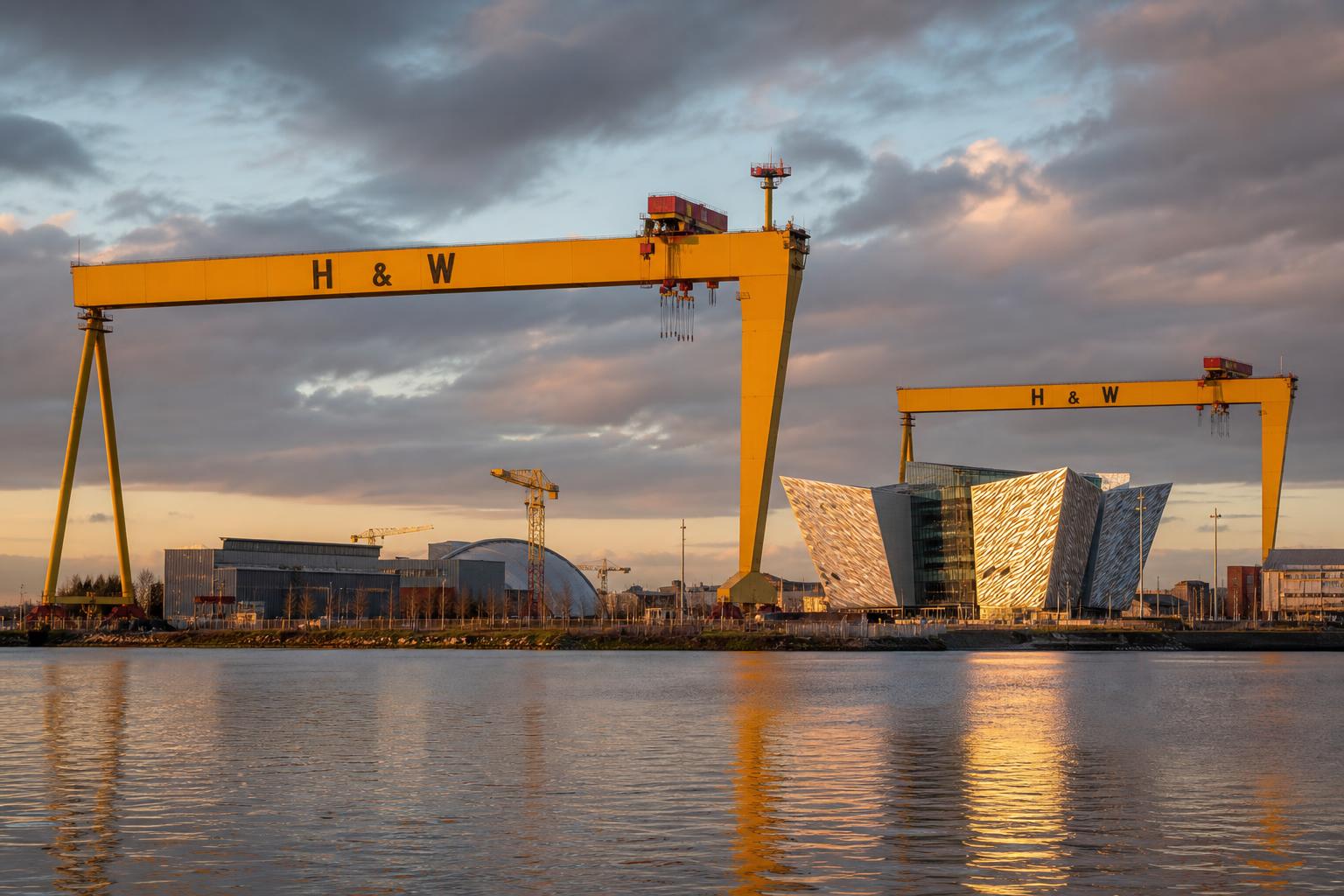
Belfast — Béal Feirste, 'mouth of the sandy ford' — is the biggest city in Northern Ireland and the natural southern start of the Causeway Coastal Route. A century ago it built the world's biggest ships and the world's biggest linen mills; thirty years ago it was a place people only heard about on the news. Today it's a small, walkable, slightly self-deprecating city built around the river Lagan, with the Titanic Quarter on one side, the Cathedral Quarter on the other, and the road north to the Glens of Antrim signposted from City Hall.

Where the Causeway Coastal Route begins (or ends).

Sharing from the Wild Atlantic Way

You're in Belfast. Send it to someone who'd love it.

First things first

Where are you headed next?

Tell us once and we'll shape the rest of the page around it.

The essentials

What you shouldn't miss.

Locally chosen, not algorithmic. In rough order of "if you only do one thing".

History

Titanic Belfast

The angular silver museum on the slipway where Titanic was actually built. Six floors take you from Belfast's industrial peak through the building of the ship, the sinking, and the recovery of the wreck. Allow two and a half hours, and book a timed slot online — walk-up tickets often sell out in season.

Good to know · Titanic Quarter, 15 minutes' walk from the city centre. Paid entry. Café on site.

History

Belfast City Hall

The Edwardian-baroque centrepiece of Donegall Square, finished in 1906 with white Portland stone and a copper dome. Free guided tours run several times a day — the marble entrance, the council chamber, the small but excellent Belfast history exhibition. The grounds are the city's front lawn.

Good to know · Free. Tours Mon–Sat, check times on the day at reception.

Town

The Cathedral Quarter

The narrow lanes north of the city centre around St Anne's Cathedral — the Duke of York, the Dirty Onion, the Commercial Court with its umbrellas overhead. The best of Belfast's bar, gig and street-art scene in five walkable blocks.

Good to know · On foot from City Hall in ten minutes. Liveliest Thu–Sat evenings.

History

A Black Cab tour of the murals

Ninety minutes in a London-style cab with a driver who'll take you up the Falls Road and the Shankill, stop at the peace walls, and explain the murals from a perspective newspapers never quite manage. Several operators; book direct rather than through a hotel.

Good to know · Pickup from most central hotels or the city centre. Around £40 per cab (1–4 people). Tip if it was good — it usually is.

History

The Ulster Museum

Free. In the Botanic Gardens. Three departments — art, history, natural sciences — and a particularly good Troubles gallery on the top floor. Easy to spend two hours; easy to spend half a day.

Good to know · Free entry. Closed Mondays. The Botanic Gardens around it are worth a wander.

Town

St George's Market

Late-Victorian covered market off May Street, running Friday to Sunday — fish on Friday, food and crafts at the weekend, live music throughout. The most reliably good few hours in town if you've got Saturday morning to fill.

Good to know · Fri 8am–2pm, Sat 9am–3pm, Sun 10am–3pm. Free entry. Cash and card.

Local businesses

Places we'd point a friend to.

Hand-picked, not paid for. The ferries, the beds, the pubs and the bike hire that make a visit work.

Before you go. These listings are compiled from public sources and aren't yet verified by the businesses themselves. Hours, menus and prices change with the seasons — always check directly with the venue before travelling, and book ahead in July and August. Owners can get in touch to update their listing.

Do

Run a place in Belfast?

Our directory is curated, not pay-to-play. If we'd recommend you, you can be on here.

See how to get listed

Got a window or a counter?

Download a free A5 QR card for Belfast — print it, stick it up, and visitors land straight on the Belfast guide.

Ask a local

The bits that aren't on Google.

Common questions

What people ask about Belfast.

Is Belfast worth visiting?

Yes — Belfast is the cultural and political capital of Northern Ireland, with the world-class Titanic Belfast museum, the Cathedral Quarter for nightlife and street art, Crumlin Road Gaol, the political murals of the Falls and Shankill roads, and a serious food scene. It's also the natural start of the Causeway Coastal Route north.

How many days do you need in Belfast?

Two full days covers Titanic Belfast, a black-taxi mural tour, the Cathedral Quarter, City Hall and Crumlin Road Gaol. Add a third day if you want to take the train up the coast to the Giant's Causeway as a day trip, or properly explore the food scene around St George's Market.

Is Titanic Belfast worth visiting?

Yes — Titanic Belfast is widely considered one of the best modern museums in Europe and stands on the exact slipway where the Titanic was built and launched. Allow 2.5 to 3 hours. Book online for a timed entry; the museum sells out at peak times and walk-up tickets are not guaranteed.

Is Belfast safe to visit?

Yes — Belfast is a safe modern city for visitors, with crime rates broadly comparable to other UK cities. The peace walls and political murals are part of the city's recent history and are openly visited on guided black-taxi tours; these are conducted respectfully and are recommended for context.

Practical

The things you'll wish you'd known.

Fuel
Filling stations all around the inner ring road. Nothing in the centre itself.
Cash
Banks and ATMs everywhere; almost everywhere takes card. NI banknotes are legal tender — accept the change you're given.
Currency
Pound sterling (£). If you're heading north from Dublin or up from the Wild Atlantic Way, change or use a card with no FX fee.
Parking
Victoria Square, Castlecourt and St George's are the easy multi-storeys. On-street is metered Mon–Sat to about 6pm.
Getting around
Walkable end-to-end in 30 minutes. The Glider (G1, G2) bus runs east–west across the city; Translink for everything else.
On the route
Southern anchor of Tourism NI's Causeway Coastal Route. The Antrim Coast Road begins at Larne, half an hour north.

Designed & developed by ideapath.app